Women tea plantation workers in Jalpaiguri and Alipurduar in the Dooars region of West Bengal form nearly 60–70% of the plantation workforce, yet their socio-economic conditions remain highly vulnerable. Most women earn about ₹250 per day, which is often insufficient to meet the basic needs of their families. Studies indicate that over 80% of women workers suffer from anaemia, while around one-third are undernourished, reflecting serious health and nutrition challenges. Long hours of physically demanding work, coupled with poor housing, inadequate sanitation, and limited access to healthcare and education, further worsen their living conditions. The crisis deepens in areas affected by closed and sick tea gardens, where thousands of workers lose regular employment and income. In such situations, women—often the primary earners—are forced to struggle for daily survival, take up informal work, or seek alternative livelihoods to sustain their families.
To support and strengthen these women, Society for People’s Awareness (SPAN) has been organising tea plantation workers into collective groups called Narishakti. These groups promote women’s rights as workers and help them connect with government schemes, skill training, and alternative livelihood opportunities.
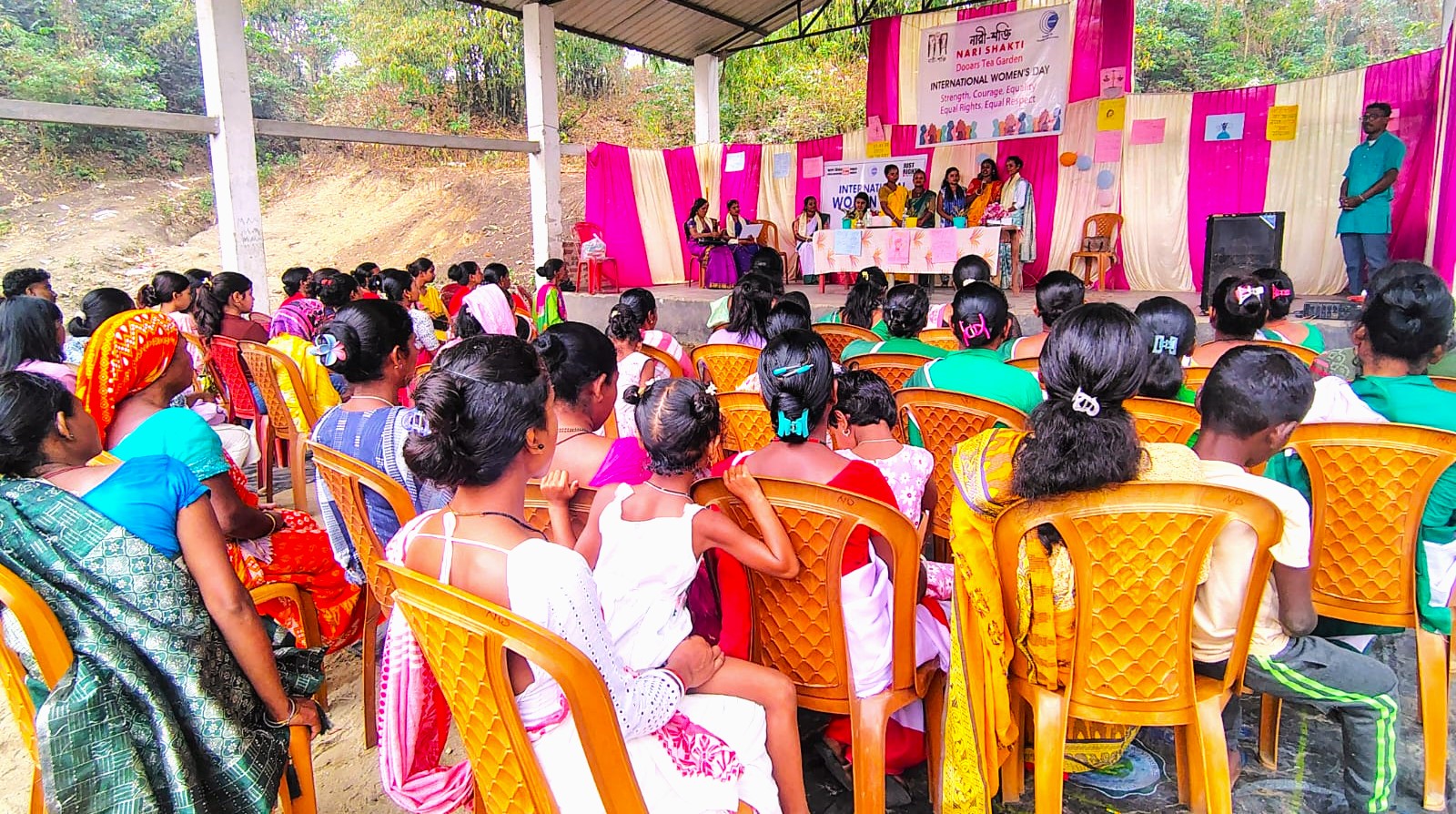
On International Women’s Day (8 March 2026), SPAN organised a community programme at Dangee Tea Garden of Jalpaiguri District, bringing together women from several tea gardens. The event was graced by Dipa Mizar (Pradhan of Batabari 1 No GP), who encouraged women leaders to continue their collective efforts for empowerment and community development.
The gathering became a platform for women to share their experiences and raise important issues—from the challenges of closed tea gardens to village concerns such as drinking water shortages, lack of nutritious food in Anganwadi centres, and transport difficulties for girls attending high school.
Despite these challenges, the resilience of the women was evident. Many have started exploring alternative livelihoods—leasing land through Self-Help Group loans to cultivate potatoes and opening small shops in village markets to support their families. The programme reinforced a powerful message: when women come together, they not only raise their voices but also build pathways toward dignity, resilience, and sustainable livelihoods in their communities.