Education
Home / Our Programs / Education
EDUCATION
Building a Brighter Future, One Program at a Time
Category :- Education
- South 24 Parganas, Dumka (Jharkhand)
Description
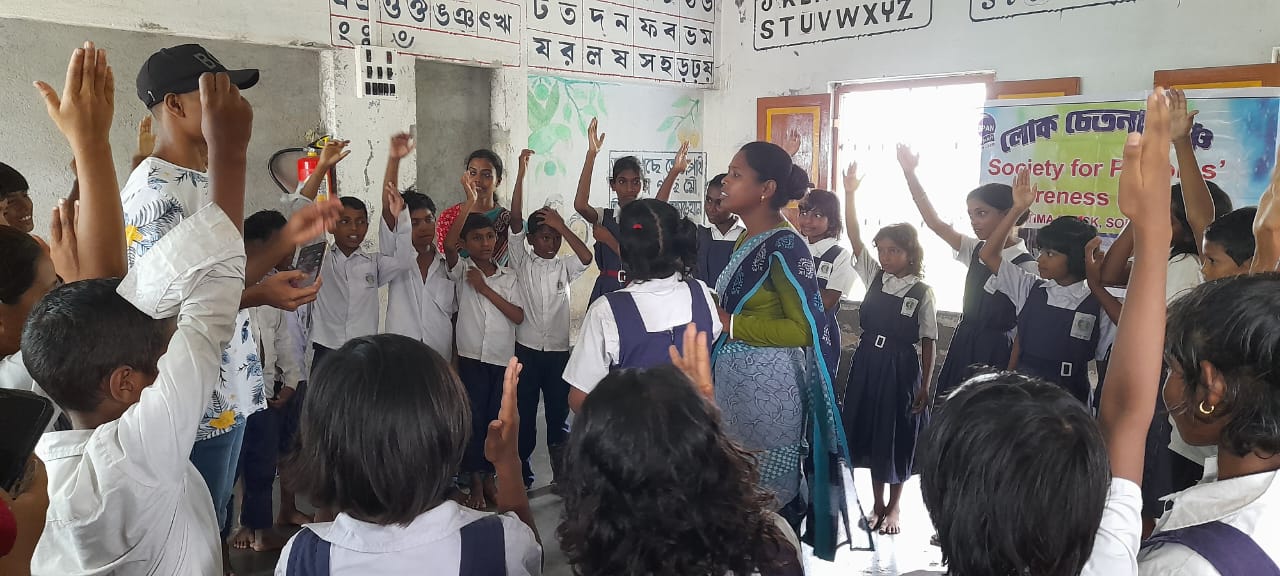
Pathochakra is a process towards agency building in school for the children of 10-14 years old between the classes of V to VIII enhancing their involvement in Knowledge area development through organising such activities, those demand digging information and know how resulting the children browsing through printed materials or materials in Internet. Such is the idea of escalating the reading habit among the students in these years.
Presently SPAN conducting regular "Pathochakra" sessions in 2 higher secondary schools of Basanti Block of South 24 parganas district of West Bengal and 1 middle school at Shikaripara Block of Dumka District of Jharkhand.
The process begins with holding regular sessions/workshops at schools with the students to plan certain activities, which have a connection to issues, which will profoundly impact their academic persuasion versatile.
Such exercises will generate an idea of forming clubs on climate, literature, culture, and science, and according to the interest children will fall in groups/clubs. Working in these clubs, student will get an opportunity to cultivate their skills and learn develop deeper understanding on each of topics under the broader headings of climate, literatre, culture, and science.
There could be three basic clubs - Green Club on Climate, Yellow club on literature and culture and Sience Club.
Category :- Education
- South 24 Parganas, Kolkata, North 24 Parganas, Purulia, Jhargram, Paschim Medinipur, Dumka (Jharkhand), Jalpaiguri, Alipurduar
Description
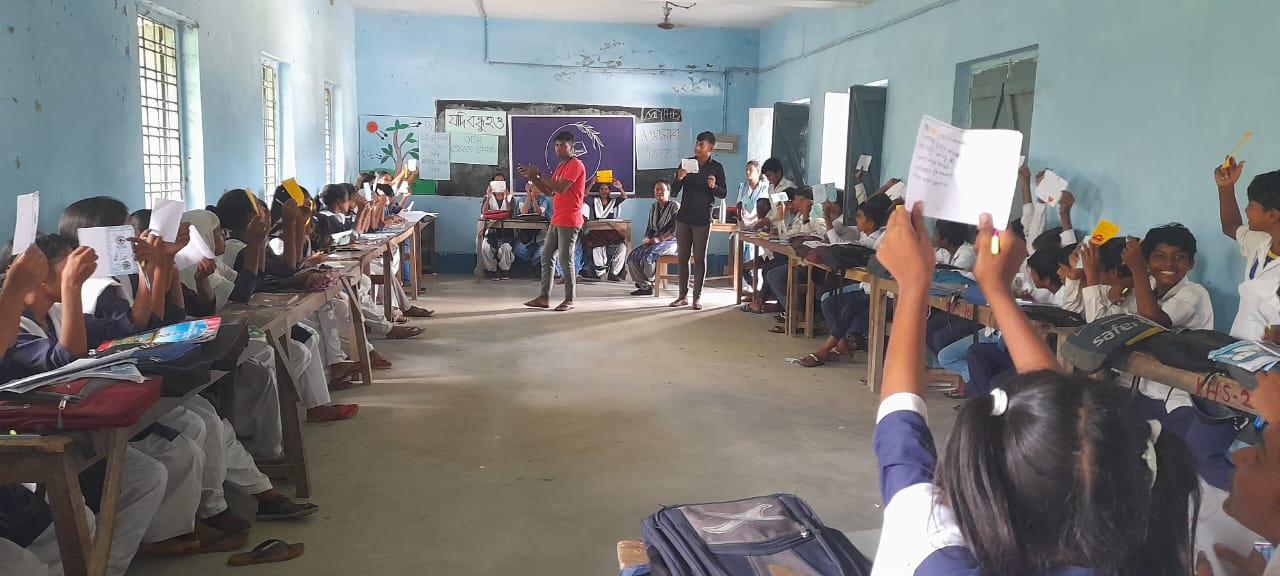
SPAN’s Open Assembly for Children’s Learning (OACL), popularly known as Pathshala, is a community-based initiative implemented with the support of local Women’s Councils (Narishakti) and Youth Councils. The programme aims to make children visible in public life, reduce their vulnerabilities, improve regular school attendance and ensure access to quality education. It primarily supports children aged 6–14 years who have irregular school attendance or have recently returned to school after dropping out.
Programme Reach and Educational Outcomes
In the year 2025-2026, 28 OACL centres are operational across eight rural blocks and four municipalities in nine districts of West Bengal and Jharkhand, reaching 669 children. The programme has helped reconnect 68 out-of-school children with formal schooling, strengthening their access to education and opportunities for continued learning.
The district-wise data demonstrate the programme’s contribution to educational inclusion. In Paschim Medinipur, 18 children from Burisol were enrolled or reconnected with school, while eight children from Dalkathi in Jhargram district benefited similarly. In Kamarhati, North 24 Parganas, 12 children returned to school. Other notable achievements include seven children from Belgachhia, Kolkata; four each from Kalidanga in South 24 Parganas, Ward 16 in North 24 Parganas, and Dilkhush in South Dumdum; and three each from Tulasipara in Alipurduar and Ramdhanu in South Dumdum.
These outcomes reflect the role of community-based learning spaces in identifying children who are excluded from education and facilitating their return to formal schooling.
Improving Learning and Child Protection
OACL centres provide learning support to children, many of whom are first-generation learners without adequate academic assistance at home. Through lesson preparation and supplementary educational support, the programme seeks to improve children’s capacity to participate in classroom learning and maintain regular attendance.
Regular headcounts help track children’s participation and identify missing children, strengthening community vigilance around their safety and educational continuity. Sessions on children’s rights, values, entitlements, environment, ecology and climate awareness broaden their understanding beyond textbooks. Games, music and theatre make learning participatory and engaging, creating opportunities for children to express themselves and participate more confidently in community life.
Community Ownership and Youth Leadership
A key outcome of OACL is the active involvement of local women and youth in supporting children’s education. Youth Council members serve as trained mentors, contributing their time and working alongside SPAN and Narishakti. Their engagement, supported through joint financial contributions from SPAN and local Women’s Councils, promotes shared responsibility for children’s learning and protection.
SPAN’s OACL programme has established a community-supported platform for educational inclusion, reaching 669 children and facilitating the return of 68 out-of-school children to formal education.
Category :- Education
- Kolkata, South 24 Parganas, North 24 Parganas, Purulia, Jalpaiguri, Alipurduar, Dumka (Jharkhand)
Description
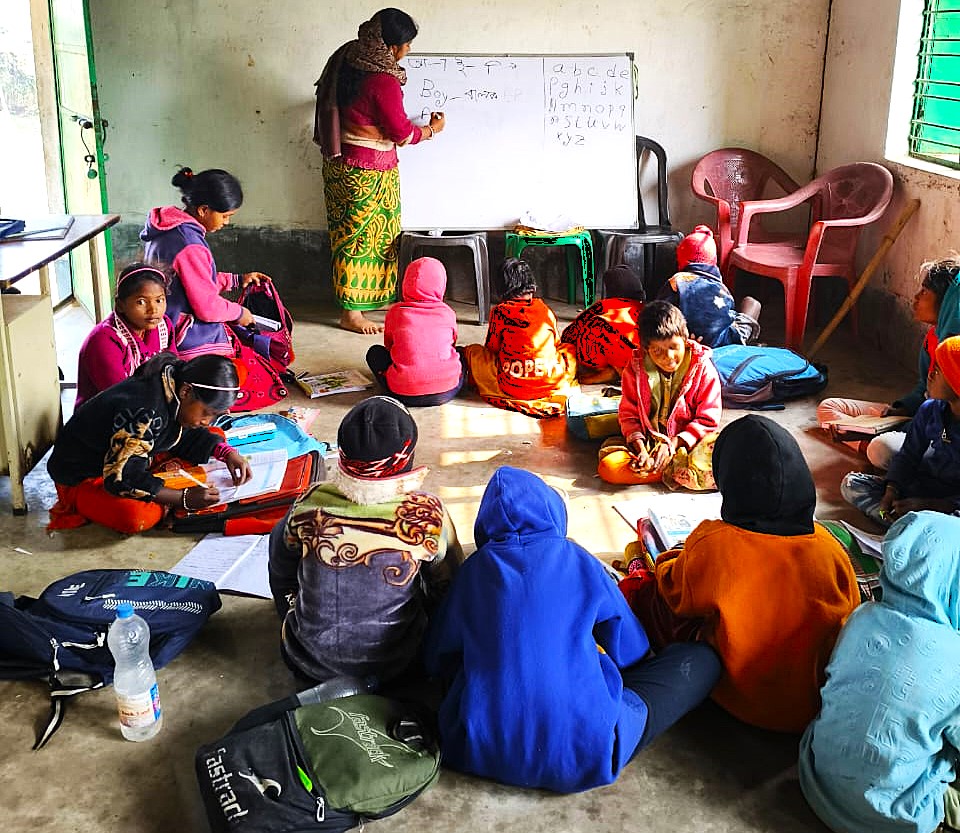
Jeevan-Path is an initiative designed for children aged 6 years to 9 years enrolled in government schools, with a primary focus on bridging learning gaps and delivering quality education. This program recognizes that each student has unique learning needs and that education extends beyond academics. It encourages students to learn through imagination, observation, and hands-on experiences. The students are engaged in project-based learning, with projects tailored to their capabilities, allowing them to work independently. Jeevan-Path sessions are held daily at the primary government schools, providing continuous support for students' educational development. Currently, the program reaches 20 schools across five districts of West Bengal—South 24 Parganas, North 24 Parganas, Purulia, Jalpaiguri, and Alipurduar and one district of Jharkhand – Dumka. The program is benefiting 1400+ primary school student.
The Jeevan path sessions are facilitated for meeting twin objectives. First, the child should learn innovatively to fluently read, write correctly, comprehend, and solve appropriately. Second, children’s learning in classroom to be integrated with the environment outside and will restore school ecology (teacher-student, teacher-parents, parents-children, children-children) by caring concerns within the democratic polity of the country.
Regular workshops with children, youth, and teachers in primary school on language, Math and environment are being organised to boost the knowledge, skills, and practice and fill the learning gap in a fearless environment where rote learning is completely discarded.
SPAN is also ensuring all the children returning and cent percent attendance of children by making door to door visits to spread awareness around education and related issues.
26 local young graduates and college-goers as volunteers took leadership in the process. They got the initial training. They are participating in these Jeevan Path workshops and accelerate the learning process with the guidance of the local teachers. They are the child rights defenders of their locality.
Besides, Jeevan Path truly adheres the principles and norms evolved from the National Education Policies of 1968, 1986, 1992 and Kothari commission Report. It also follows and tries to see RTE Act as the reality. SPAN has developed a detailed module for Jeevan Path by consulting several teachers.